Rockford & Winnebago County
Level It. Don’t Replace It.
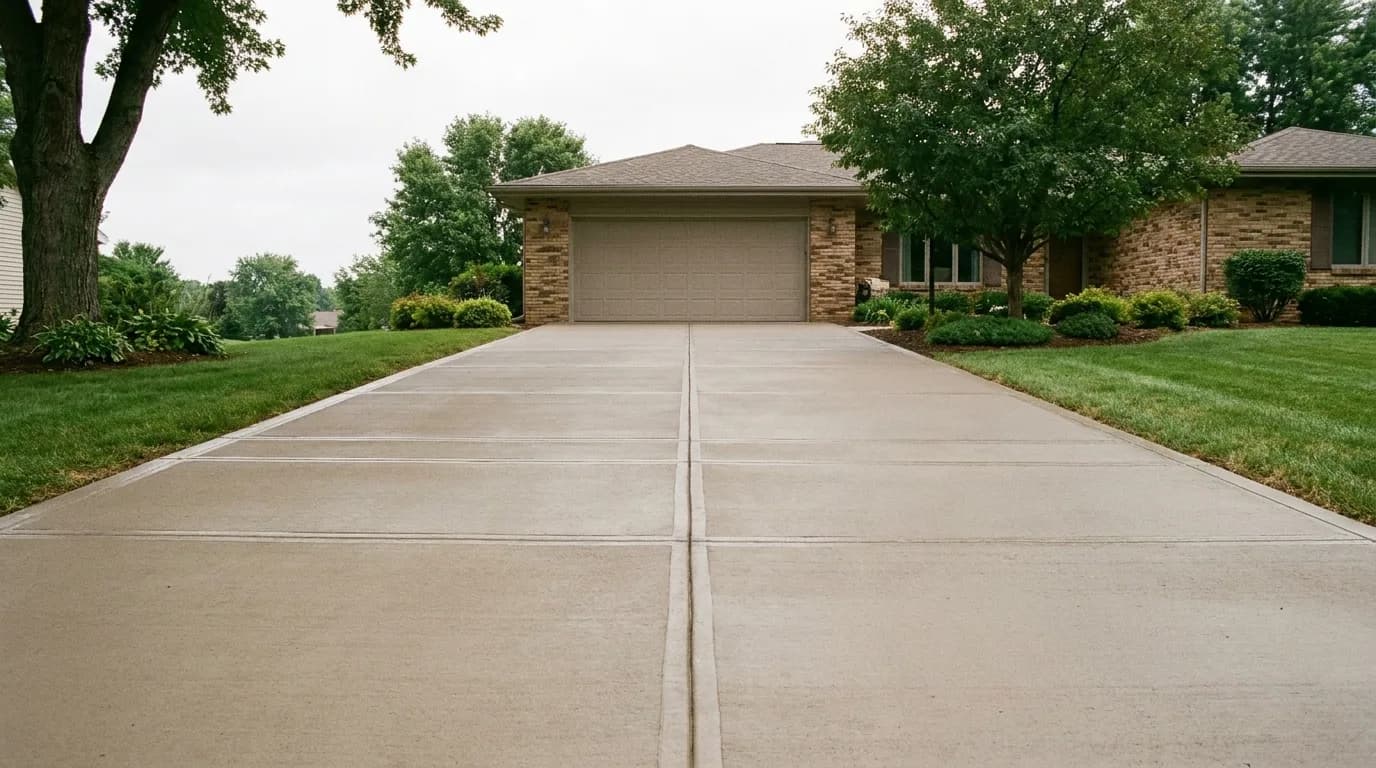
Driveways, walks, patios and garage floors raised back to grade. A few hours, no tear-out, and you can drive on it the same day.
- 42in
- Rockford frost line. Your slab sits above it
- $500–3,000
- What most residential jobs run
- Same day
- Back in use, no cure time
- 7 towns
- Rockford and the surrounding area
Why it happens here
Your house is built below the frost line. Your driveway is not.
This is the part almost nobody explains, and it is what people are really worried about when they notice a drive pulling away from the garage.
The 42 inch figure is the City of Rockford’s own frost footing requirement, read from their published FAQ on September 22, 2026.
- 01
Rockford's frost line is 42 inches
The City of Rockford requires frost footings at 42 inches below grade. That number exists because the ground here genuinely freezes that deep, and anything resting above it is inside the layer that moves every winter.
- 02
Flatwork is poured on grade, not on footings
A driveway, sidewalk, patio or garage floor sits a few inches down on whatever soil is underneath it. No footings, no frost protection, and no requirement for either. That is normal construction, not a defect.
- 03
So they move independently, and they are supposed to
The house is anchored below the freeze. The slab beside it rides on top of it. A driveway pulling away from a garage is usually the driveway leaving, not the house sinking, which is the opposite of what most people assume when they first notice it.
- 04
Water decides how far it goes
Freeze-thaw opens the joints. Water gets in, washes fine soil out from beneath the slab, and leaves a void. The concrete bridges that void until load or another winter drops it. This is why the fix and the drainage conversation always happen together.
Full explanation, including what a void actually is and when it is not the slab at all, on why concrete sinks in Rockford.
What gets lifted
Every Slab on the Property
Each settles for a different reason and gets approached differently. These pages say what is specific to that slab, not the same paragraph with a new noun.
Driveway Leveling
Driveways fail at the apron and at the street first, because both ends sit against something that was backfilled rather than on undisturbed ground.
Read moreSidewalk Leveling
Sidewalks are the one slab where the fix is cheap and the consequence of not fixing it is not. They are also where tree roots, not soil, are usually the cause.
Read moreGarage Floor Leveling
The garage floor is the one interior slab in the house, which means when it drops, water that used to run out now runs in, and it runs toward whatever is stored on the floor.
Read morePatio & Pool Deck Leveling
Patio and pool deck slabs sit directly against the foundation, so a settled one does not just look wrong, it redirects roof and surface water at the wall it is touching.
Read moreSteps & Stoops
Steps are the slab most likely to be a genuine fall risk, because a step height that changes without warning is exactly what a foot does not expect.
Read moreVoid Filling
This is the only service on the site that is bought before there is a visible problem, which makes it the one most people have never heard of.
Read moreTrip Hazard Repair
Everything else on this site is bought by a homeowner reacting to something they can see. This is bought by a manager working through a list, which is why it is the one that repeats.
Read moreDiagnosis
How to Tell If You Need It
Not every crack needs a contractor, and a slab that looks fine can already be sitting over an empty space. These are the signals worth acting on, roughly in the order they appear.
The hollow sound is the one to act on early. A void that has not dropped a slab yet is the cheapest version of this job, and almost nobody calls about it because there is nothing to see.
- A lip at a joint you can catch a shoe on, or that a shovel snags every winter.
- A hollow, drummy sound when you tap the slab, meaning the void is already there.
- Water standing on the slab for a day after rain, where it used to drain off.
- A gap opening between a stoop or patio and the wall of the house.
- A garage door that no longer seals evenly along the bottom.
- One step in a run that has become noticeably taller than the others.
Two methods
Foam or Mudjacking
Both work. They cost different amounts, last different lengths of time and suit different slabs. Anyone who says one is always the answer is telling you which machine is on their truck.
Polyurethane foam
Holds up about 10 to 15 years
A two-part polyurethane is injected through holes roughly the size of a penny. It expands underneath, fills the void, and lifts the slab as it goes.
- Cures in minutes, so the surface takes weight the same day
- Very light, around a few pounds per cubic foot, so it adds almost no load to soil that already failed once
- Penny-sized holes rather than the larger ones slurry needs
- Does not wash out, so it is the better choice where water caused the void
Mudjacking
Holds up about 5 to 10 years
A slurry of sand, soil and cement is pumped under the slab through larger holes, filling the void and floating the concrete back up.
- Cheaper up front, roughly $3 to $8 per square foot
- Long-established method that plenty of crews around here still run well
Side by side with the real numbers on mudjacking versus foam.
The real decision
Lift It, or Replace It?
Lifting is cheaper and faster almost every time, but not every time, and a contractor who never recommends replacement is not being straight with you. The test is whether the concrete itself is still good.
Lift it when
- The slab is intact and settled as one piece rather than breaking up.
- The surface is sound, with no widespread flaking or exposed aggregate.
- The drop is a couple of inches or less, though more is often still liftable.
- You want it usable today rather than after a cure.
Replace it when
- The panel is cracked fully through in several places, so nothing solid is left to float.
- The surface is crumbling or spalling, which lifting does not improve at all.
- It has been lifted before and dropped again with the drainage never fixed.
- The slab is at the end of its life and you are redoing the whole area anyway.
Worth knowing: it is often one panel that needs replacing rather than the whole run. A single failed panel in an otherwise sound driveway is a panel-sized job, and it is worth asking for that specifically.
Cost
What It Runs, Honestly
Published 2026 figures, not a teaser rate. You have probably already seen these numbers elsewhere, and quoting anything prettier only falls apart at the first site visit.
| Option | Per sq ft | Service life |
|---|---|---|
| Polyurethane foam | $5–$25 | 10 to 15 years |
| Mudjacking | $3–$8 | 5 to 10 years |
| Tear out and replace | $2,000–$10,000 total | New slab, plus cure time |
Final price depends on how many slabs, how far they have dropped, and how easy the area is to reach with a hose. Square footage alone does not decide it. Full breakdown.
What actually happens
A Job, Start to Finish
- 01
You describe it
Which slab, roughly how far it has dropped, and whether anything else has moved. Photos help more than measurements at this stage.
- 02
Site visit and fixed quote
Somebody walks it, checks which panels moved rather than only the reported one, and gives you a number before anything is drilled.
- 03
Drill and inject
Penny-sized holes, material injected in stages, the slab watched with a level as it rises rather than filled to a preset volume.
- 04
Patch and use it
Holes patched, surface cleaned, and the slab takes weight the same day. Nothing to keep off.
Straight answer
When a sinking slab does mean something worse
Most settled flatwork is a flatwork problem. A few cases are not, and they are worth knowing before anyone quotes you for lifting concrete.
Any of those points at foundation work rather than concrete leveling, and lifting the slab would hide the signal without fixing the cause. A crew that quotes you for the slab without mentioning it is not one to hire.
- Doors and windows inside the house sticking or out of square at the same time the slab moved
- Stair-step cracking in a foundation wall or in brick, rather than in the slab itself
- A garage floor that dropped along the wall it meets, rather than in the middle
- Basement wall bowing, or a horizontal crack in a poured wall
Not sure which you have? The free sunken slab checklist walks it in ten minutes with a tape measure and a level.
Timing
When to Schedule It Here
Northern Illinois gives this work a real season, and it is not the one most people assume.
- Spring
- The busiest and the most useful. The ground has thawed, everything that moved over winter has finished moving, and what you measure in April is what you are actually fixing.
- Summer to early autumn
- The easy window. Dry ground, full access, and a stretch of good weather before the next freeze cycle tests the work.
- Winter
- Possible with foam, which cures chemically rather than needing warmth. What gets hard is access and assessment: frozen ground and snow hide how far a slab has really dropped.
Spot a hollow slab in autumn and it is worth doing before winter rather than after. A void that gets a full freeze-thaw season is a bigger void by spring.
What it looks like
The Problem, and the Finish
Three things worth recognising on your own property: the lip at a joint, the water that gives the cause away, and what a finished lift actually leaves behind.
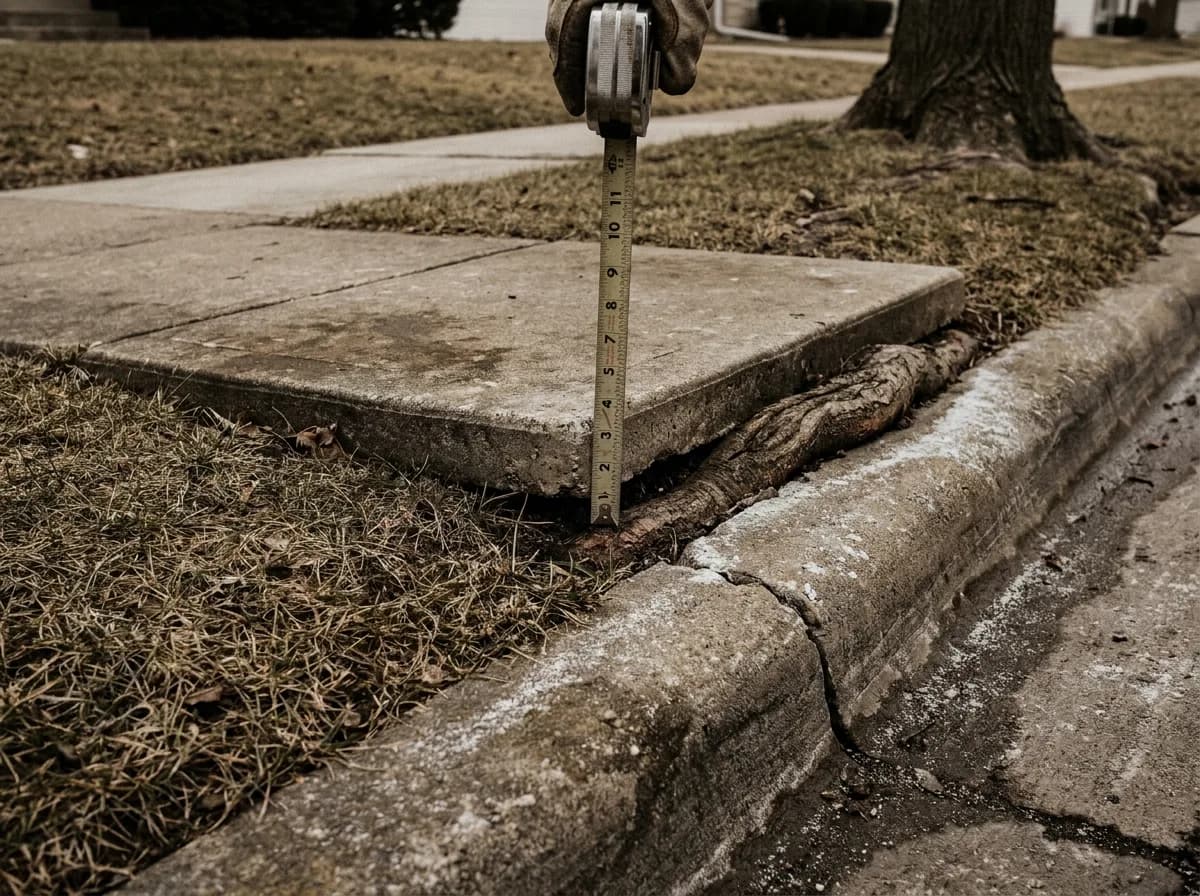
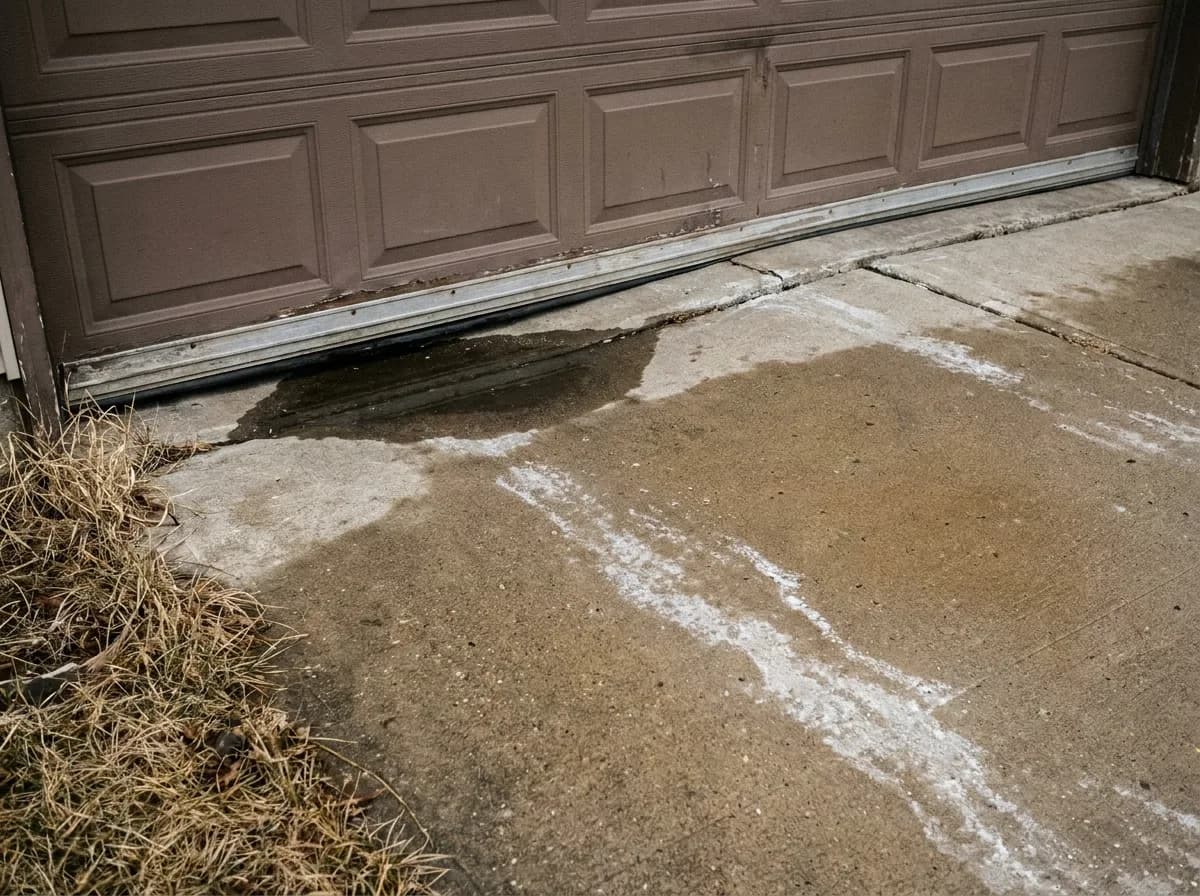
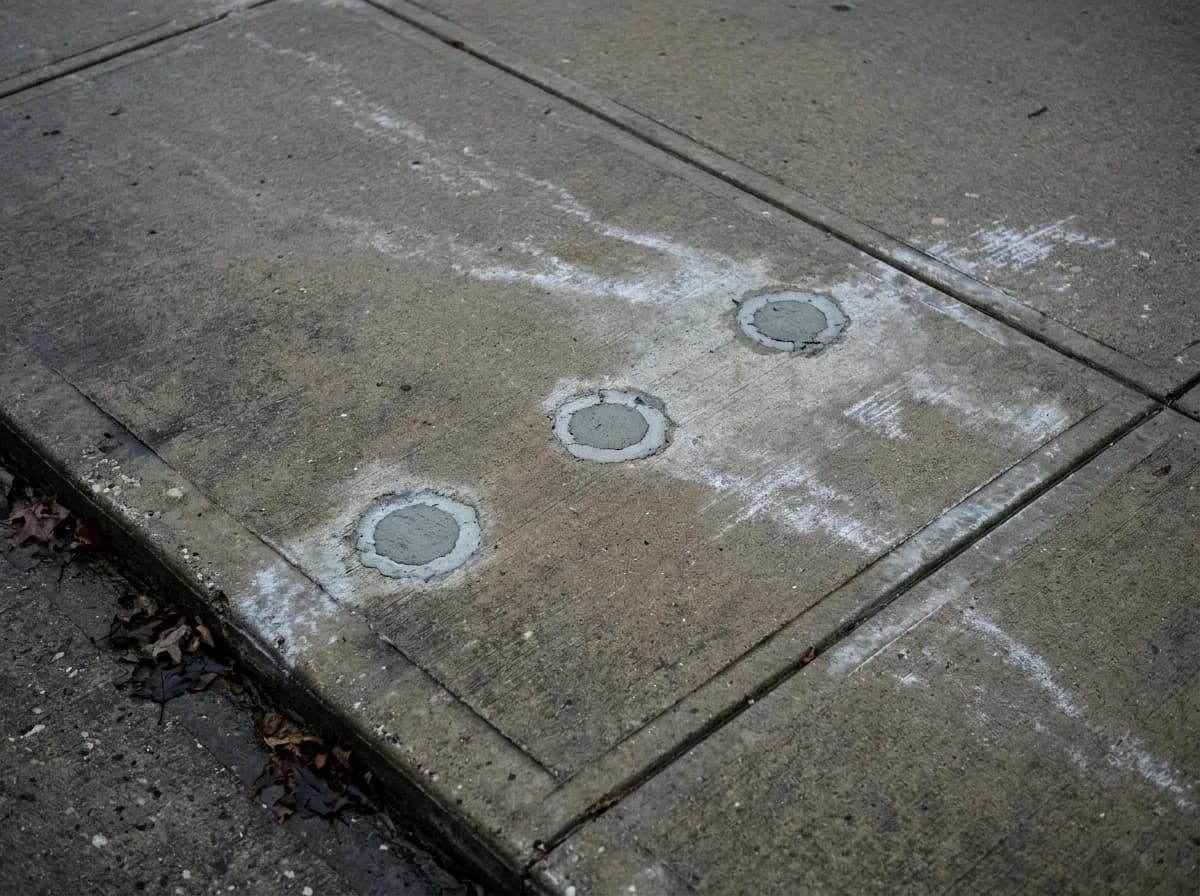
Illustrative photographs of the conditions described, not images of a specific customer’s property.
Quick answers
The Three We Get Asked Most
- Will the holes show afterwards?
- Foam injection uses holes about the size of a penny, mudjacking needs an inch or more. Both get patched with grout and the patches stay visible as small round marks. They weather down over time but they do not disappear, and any crew telling you otherwise is overselling.
- How long before I can park on it?
- With foam, within minutes of the lift, because it cures chemically almost straight away. With mudjacking, the same day once the slurry has set. Neither needs the days of cure time a fresh pour would.
- Will it just sink again?
- It can, if the thing that caused the void is still happening. A downspout discharging beside the slab washes soil out again regardless of what went underneath. A quote that talks about drainage is worth more than one that only talks about concrete.
The full set, grouped by what you are actually deciding, on the FAQ.
Managing property? Trip hazards are a different job
Surveyed across the whole site, scheduled around tenants, and written up afterwards.
Service area
Towns We Cover
Each town page covers what the concrete is actually like there, because a 1970s subdivision driveway in Machesney Park and a pre-war public walk in Belvidere are not the same job.
Send a photo, get a number back
Tell us which slab has moved and roughly how far. You get a fixed quote, not a callback to arrange a callback.